

Multiplex Lead The Way with Silica Reduction Programme
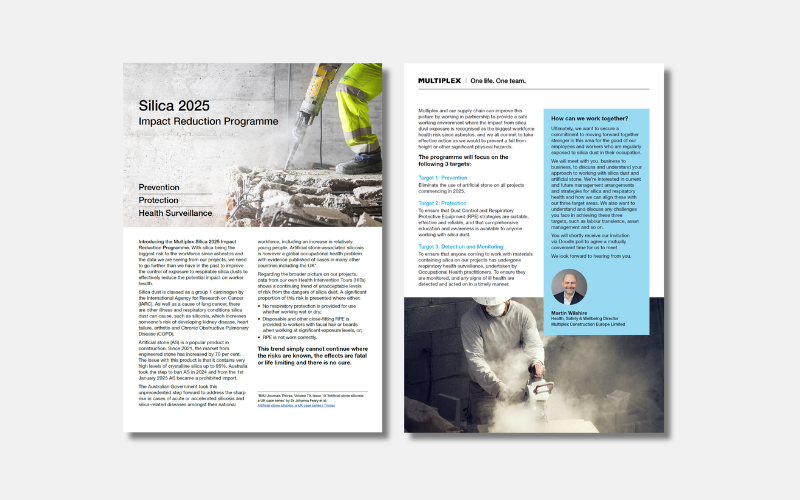
Multiplex have announced the launch of their 'Silica Impact Reduction Programme'. This is in response to a continuing trend of unacceptable levels of risk from the dangers of silica dust.
Respirable Crystalline Silica dust (RCS) is classed as a group 1 carcinogen by the International Agency for Research on Cancer (IARC). As well as a cause of lung cancer, there are other illness and respiratory conditions silica dust can cause, such as silicosis, which increases someone’s risk of developing kidney disease, heart failure, arthritis and Chronic Obstructive Pulmonary Disease (COPD).
As such, Multiplex have introduced a brand-new 3 step programme for silica impact reduction:
Target 1: Prevention
Eliminate the use of artificial stone on all projects commencing in 2025.
This follows the world-leading decision made by Australian Ministers to ban the use of artificial stone from 1st January 2025, on the basis that artificial stone is one of the largest contributors to respiratory conditions in Australia. This is a great example of using the hierachy of control to substitute materials in order to reduce hazards on site. Of course, we must be aware that Silica is a naturally occuring substance, and can still be found in materials such as stone, granite, concrete etc.
Target 2: Protection
To ensure that Dust Control and Respiratory Protective Equipment (RPE) strategies are suitable, effective and reliable, and that comprehensive education and awareness is available to anyone
working with silica dust.
Target 3: Detection and Monitoring
To ensure that anyone coming to work with materials containing silica on our projects has undergone respiratory health surveillance, undertaken by Occupational Health practitioners. To ensure they are monitored, and any signs of ill health are detected and acted on in a timely manner.
Leading the Way
Martin Wilshire, Health Safety & Wellbeing Director at Multiplex, explained, "With silica being the biggest risk to the workforce since asbestos, we need to go further than we have in the past to improve
the control of exposure to respirable silica dusts to effectively reduce the potential impact on worker
health."
Working Together to Reduce Silica Impact
Martin Wilshire is also member of the HCLG's Respiratory Working Group and is working with us to increase awareness across the industry and share best practice. Multiplex are a fantastic example of a contractor who are taking REAL action against the impact of silica dust. Let us know what your company is doing in the fight against Respirable Crystalline Silica!


Comments